
Give the gift of flight. Intro flights over Philadelphia from $99. Shop gift flights

Private Pilot Certificate · FAA Part 61

Private pilot license training in Philadelphia

Learn to fly one-on-one with a certificated flight instructor at Northeast Philadelphia Airport. You train on your schedule, from your first lesson to your checkride.

  • One-on-one with a CFI
  • Towered airport training at KPNE
  • 90%+ checkride pass rate

What the certificate lets you do

Fly yourself, your friends and your family

The private pilot certificate is what most people mean by a pilot's license. It is the base for every rating you add after it.

  • Act as pilot in command of a single-engine airplane
  • Carry passengers, day or night, in good weather under visual flight rules (VFR)
  • Plan and fly cross-country trips to other airports
  • Rent airplanes and fly for fun, travel or practice
  • Share fuel, rental and airport costs with passengers, as long as you pay at least an equal share

A private pilot may not fly for compensation or hire. Cost sharing and other limits are set by 14 CFR 61.113.

Good to know

What it does not cover

Each limit has a next step. Here is where each one leads.

Who it's for

Built for first-timers and future pros

You do not need any flying experience to start. You only need the wish to learn.

You can begin with a discovery flight. It is a real lesson with a CFI, and the time can be logged toward your certificate.

Private pilot training suits you if you want to fly for fun or travel. It is also the first step if you are aiming for a flying career. Students still in high school can start too. Read about flight lessons for teens.

What you need to begin

  • No minimum age to take lessons and log time with an instructor
  • A student pilot certificate, available from age 16, before you fly solo
  • An FAA medical certificate, third class or higher, before your first solo
  • The ability to read, speak, write and understand English (14 CFR 61.103)
  • Time to study, because ground knowledge matters as much as flying skill

Tip: book your medical exam early. Any medical question is easier to sort out before you are ready to solo.

Syllabus

What you'll learn

Private pilot training falls into three broad stages. Your instructor sets the order around your progress, but every private pilot covers this ground.

Stage 1

Pre-solo foundations

  • Preflight inspection, checklists and aircraft systems
  • Straight-and-level flight, climbs, descents and turns
  • Slow flight, stalls and stall recovery
  • Takeoffs, traffic patterns and landings
  • Radio calls with the control tower at KPNE
  • Emergency procedures, including engine-out glides
Stage 2

Solo and cross-country

  • Your first solo, then supervised solo practice
  • Flight planning, charts and navigation
  • Airspace, including the Class B above Philadelphia
  • Weather reports, forecasts and go/no-go decisions
  • Night flying
  • Solo cross-country flights to other airports
Stage 3

Checkride preparation

  • Short-field and soft-field takeoffs and landings
  • Ground reference maneuvers
  • Flying by reference to instruments
  • Diversions and lost procedures
  • Oral exam practice on regulations and decision-making
  • A practice checkride to FAA standards

Ground knowledge you'll cover

Ground instruction runs alongside your flying and prepares you for the FAA knowledge test.

  • Aerodynamics
  • Aircraft systems
  • Weight and balance
  • Performance
  • Weather
  • Airspace
  • Navigation
  • FAA regulations
  • Aeromedical factors
  • Risk management

Free ground school

Start studying before your first lesson

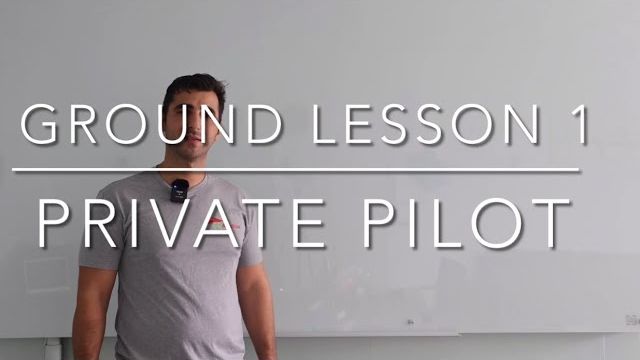
Our instructors recorded a private pilot ground course, from aeronautical decision-making to airport signs and markings. Watch lesson 1 here, then work through the rest at your own pace.

All ground school videos

Lesson 1 of our private pilot ground course.

How training works at GQ

One student, one instructor, one plan

We train under FAA Part 61. Your instructor builds your training around your goals, your availability and how quickly you learn.

One-on-one with a CFI

Your lessons are one-on-one with a certificated flight instructor, not shared with a group.

A written plan

You get a written training plan, so you always know what comes next.

Brief and debrief

Each lesson starts with a briefing and ends with a debrief. You leave knowing what went well and what to work on.

Ground instruction

Ground lessons match what you fly next, so the theory makes sense in the air.

Knowledge test endorsement

Your instructor guides your study and signs you off for the FAA knowledge test when you are ready.

Mock checkride

Before you meet the examiner, you fly a full practice checkride, so the real one feels familiar.

GQ has trained 50+ students toward their certificates, as cited by Philadelphia City Council Resolution 230535. Our own checkride pass rate is 90%+.

Read about our City Council recognition

Airport and aircraft

Learn at a towered airport from day one

Northeast Philadelphia Airport (KPNE) is a towered Class D airport with two runways, 6/24 and 15/33. It sits beneath Philadelphia's Class B airspace.

That means you talk with air traffic control on every flight. Radio calls that feel hard at first soon become routine. Two runways pointing in different directions also give you options when the wind picks up.

Your airplane

Trainer

Cessna 150

A classic two-seat, high-wing trainer: simple, forgiving and economical.

Trainer

Piper Cherokee (PA-28-140)

Prefer a low-wing airplane? The Cherokee is a stable four-seat trainer. Ask us which one suits you.

Meet the full fleet

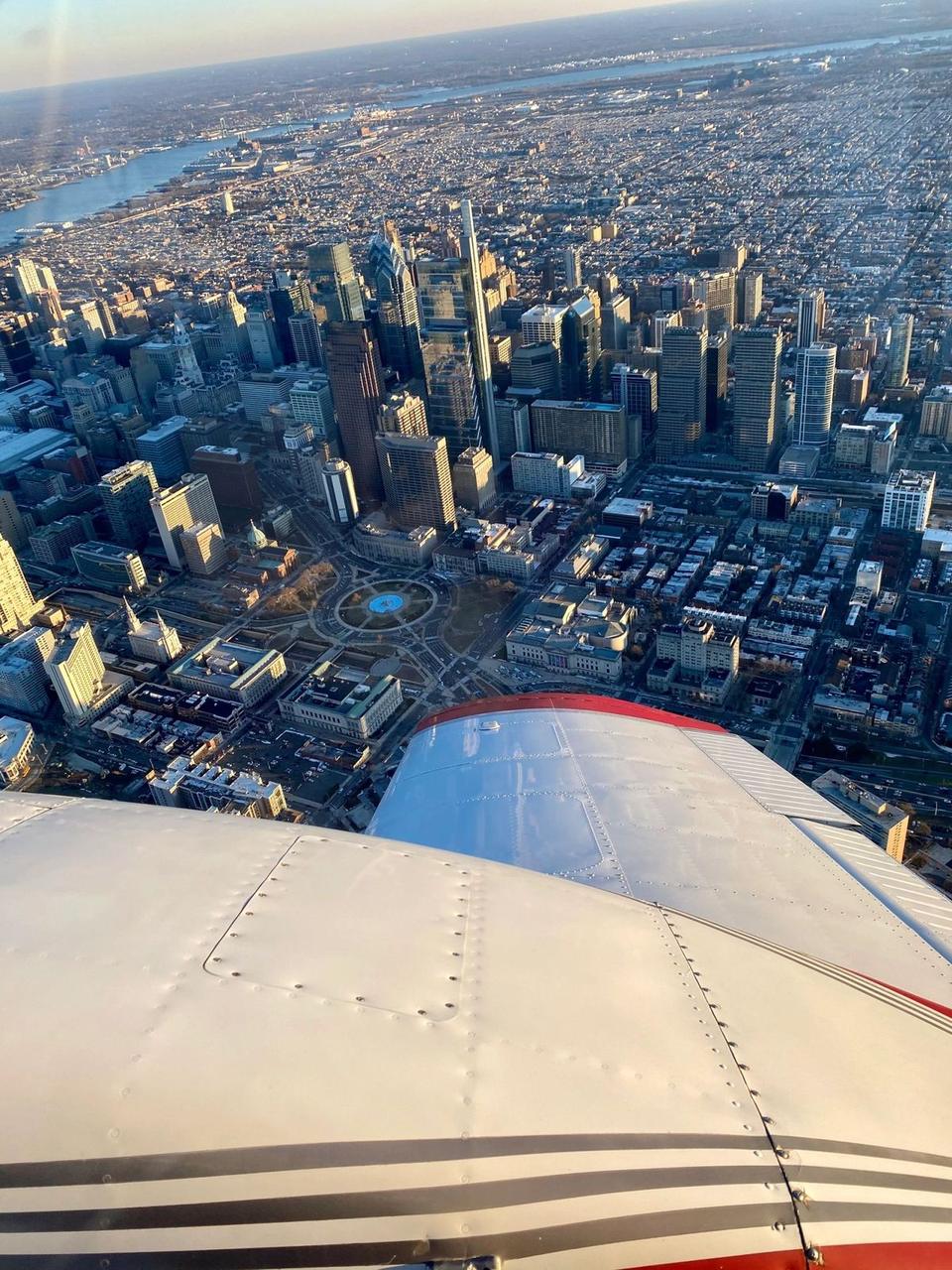
Center City Philadelphia seen from the wing of a GQ Aviation airplane
Center City Philadelphia from the wing of a GQ Aviation airplane.

Timeline

How long will it take?

There is no fixed timeline under Part 61. The FAA sets a 40-hour minimum, and your pace depends on you.

The FAA notes that most people need 60 to 75 hours of training (FAA Pilot Schools Information). You are ready when you fly to the FAA standard, not when your logbook hits a number. Our pilot license cost guide explains what that means for your budget.

The biggest factors are how often you fly, the weather, and how much you study between lessons. Students who fly on a steady schedule keep their skills fresh. They spend less time reviewing and more time moving forward.

Tell us your availability and your goal date. We will talk through a realistic plan before you commit.

Keep your training on track

  • Get your FAA medical before you start
  • Fly on a regular schedule so skills don't fade
  • Study ahead so flight time is spent flying
  • Pass your knowledge test early in training
  • Give 24 hours' notice if you need to reschedule

If weather or maintenance cancels a lesson, we find a new date at no charge. See our scheduling policies.

What comes next

Where your private certificate leads

Your private certificate is the start of a path. At GQ it runs Private, then Instrument, then Commercial, then Multi-Engine.

Next step

Instrument rating

Learn to fly in clouds and low visibility. It is the natural next step after your private certificate.

Explore instrument rating training
Plan your budget

Pilot license cost

See what goes into the cost of earning a private pilot license in Philadelphia.

Read the cost guide
Not ready yet?

Discovery flight

Fly the airplane with a CFI beside you at the dual controls. The time can be logged toward your certificate.

How a discovery flight works

Private pilot FAQ

Questions about getting your license

Have a question we didn't cover? Call (215) 839-8507 or read our main FAQ.

How long does it take to get a private pilot license?

It depends on how often you fly, the weather and how much you study. The FAA minimum is 40 hours of flight time (14 CFR 61.109). Treat that number as a floor, not a promise. Your instructor will tell you where you stand at every stage.

Do I need a medical certificate before my first lesson?

No. You can start lessons without one. You need an FAA medical certificate, third class or higher, before you fly solo (14 CFR 61.23). An FAA aviation medical examiner (AME) issues it, so we suggest booking your exam early.

How old do I have to be?

There is no minimum age to take lessons and log instruction with an instructor. You can get a student pilot certificate at 16, which you need to solo (14 CFR 61.83). You can earn your private pilot certificate at 17 (14 CFR 61.103). Younger students can read about flight lessons for teens.

Does a discovery flight count toward my license?

It can. A discovery flight is a real lesson with a CFI, and the time can be logged in your pilot logbook toward a certificate.

Should I train in the Cessna 150 or the Piper Cherokee?

The Cessna 150 is a two-seat, high-wing trainer. The Piper Cherokee (PA-28-140) is a four-seat, low-wing trainer. Both are great for private pilot training, so ask us which one suits you.

What costs are not in the package?

Before you start, we confirm in writing what your package includes and any separate costs, such as FAA test and examiner fees. Packages can't be refunded once training has started. Our pilot license cost guide explains the full picture.

Is there a weight limit?

Yes. For safe weight and balance, the maximum is 250 lbs per person.

Ready to become a pilot?

Tell us your goals and your schedule. We'll help you plan your private pilot training.

Call Buy a flight